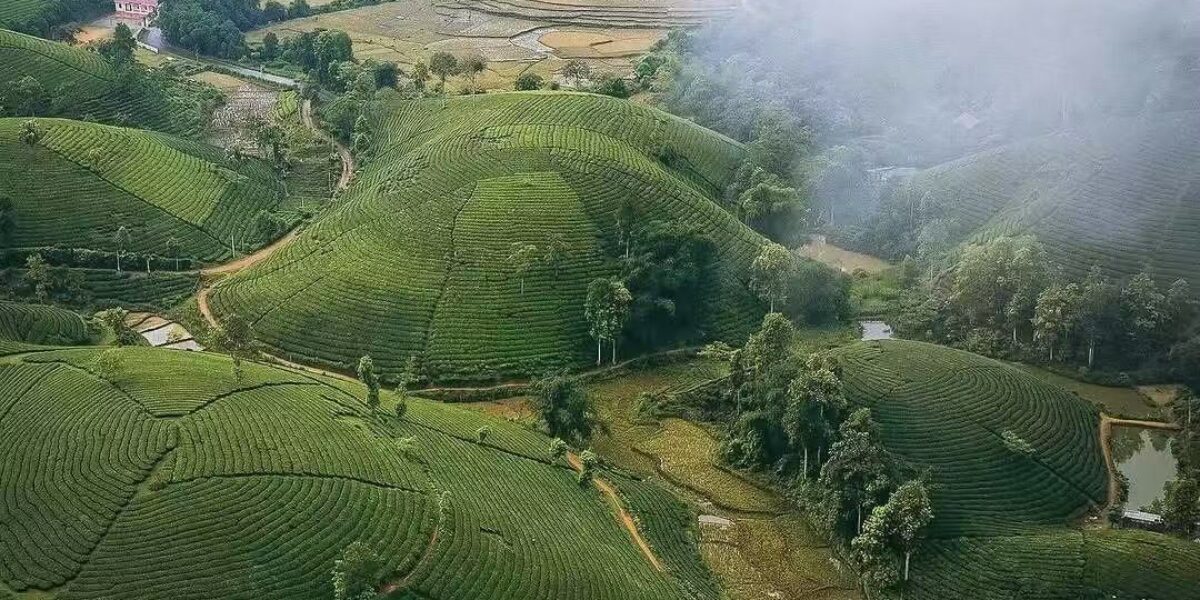
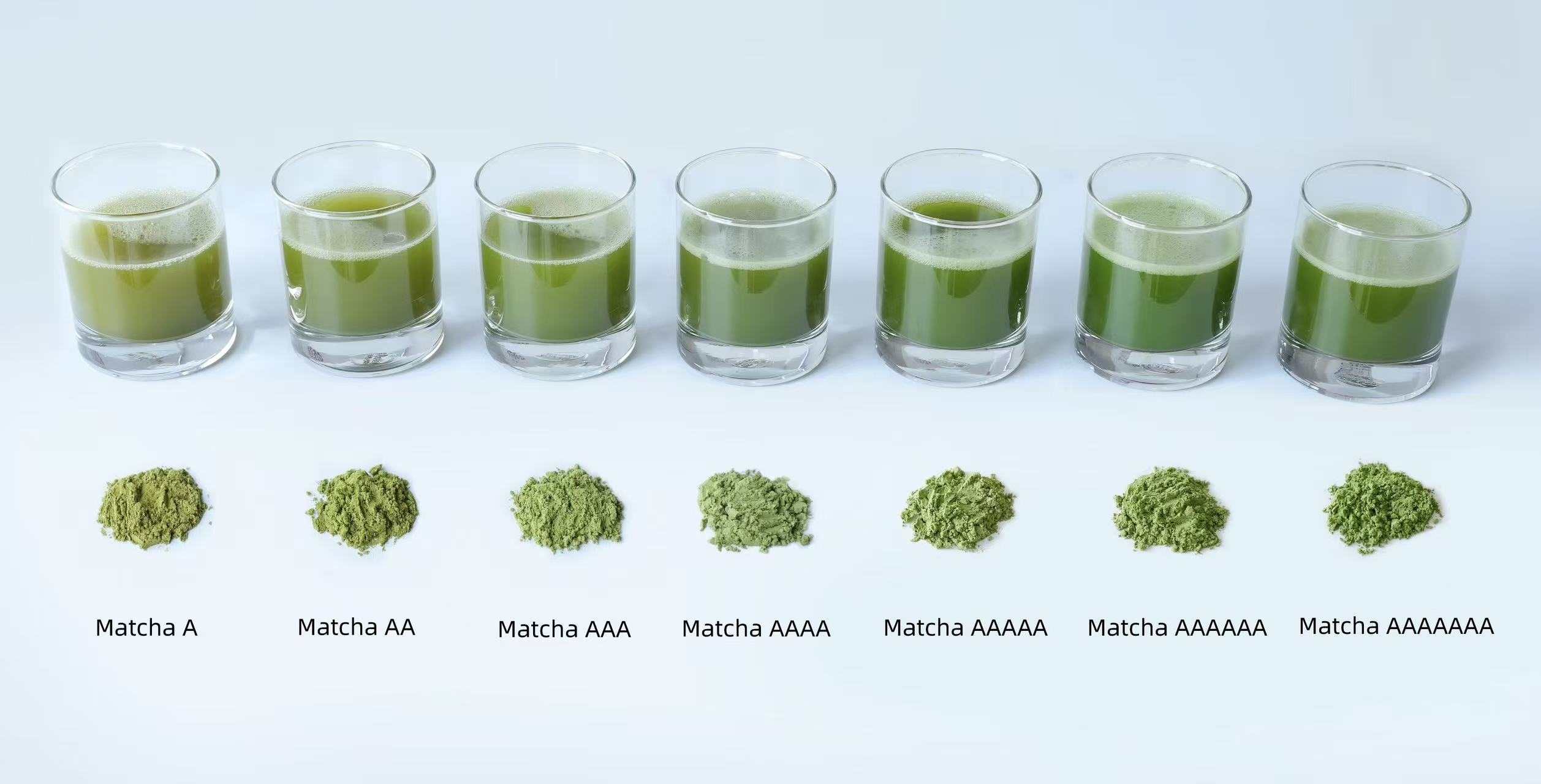
Comparison of different matcha grades after mixing with water, showing color performance and texture differences.
Ultimate Matcha Grade Guide: From 1A to 7A Matcha Powder Quality, Taste & Applications
Choosing the right matcha grade is important for cafés, beverage brands, food manufacturers, wholesalers, and importers.
Our matcha grades include:
1A–3A Matcha:
Commercial food applications and cost-effective solutions
4A–5A Matcha:
Premium beverages, cafés, and specialty drinks
6A–7A Matcha:
High-end matcha products and premium applications
Need help choosing the right matcha grade? Contact us for samples and professional recommendations.
Introduction: Understanding Matcha Quality Before Buying
Matcha has become one of the most popular natural ingredients in the global food and beverage industry.
Today, matcha is widely used in:
- Coffee shops
- Bubble tea stores
- Beverage brands
- Bakeries
- Ice cream manufacturers
- Food production companies
Consumers are increasingly looking for products that are natural, premium, visually attractive, and unique in flavor.
As a result, high-quality matcha powder has become an important ingredient for many businesses worldwide.
However, choosing the right matcha grade is not always easy.
Many buyers ask:
- What do matcha grades mean?
- Is higher grade matcha always better?
- Which matcha is best for matcha latte?
- Which matcha grade should food manufacturers choose?
- What is the difference between premium matcha and culinary matcha?
The answer depends on your application, target customers, and budget.
A premium ceremonial grade matcha may be perfect for traditional tea preparation, but it may not always be the most cost-effective choice for large-scale beverage production.
On the other hand, culinary matcha may work well for baking and food manufacturing, but it may not provide the vibrant green color and smooth taste required for premium beverages.
Understanding matcha grades helps businesses make better purchasing decisions.
This guide explains matcha quality differences, including color, aroma, taste, texture, applications, and our factory’s 1A to 7A matcha classification system.
Please note that matcha grading systems may vary between manufacturers and regions. The 1A–7A classification mentioned in this guide represents our factory’s internal quality classification, designed to help customers better understand product differences and choose the right matcha for their needs.
What Are Matcha Grades?
Matcha grades are classifications used to describe differences in matcha powder quality.
The quality of matcha is influenced by several important factors:
Tea Leaf Selection
High-quality matcha usually uses younger and more tender tea leaves.
Younger tea leaves are generally associated with:
- Brighter green color
- Smoother texture
- Fresh aroma
- Better flavor balance
Harvest Season
The harvest time has a major impact on matcha quality.
Early harvest tea leaves are commonly preferred for higher-quality matcha production because they generally provide more delicate flavor characteristics and a smoother taste profile.
Grinding Process
Traditional matcha is made by carefully grinding tea leaves into a fine powder.
A finer powder usually provides:
- Smoother mouthfeel
- Better mixing ability
- Improved drinking experience
Color, Aroma and Taste
High-quality matcha is usually recognized by:
- Vibrant green color
- Fresh tea aroma
- Natural sweetness
- Smooth texture
- Balanced umami flavor
Lower grades may have stronger bitterness and a more traditional green tea taste.
Is There an International Matcha Grading Standard?
One common question from international buyers is:
“Is there an official global standard for matcha grades?”
The answer is:
No. There is currently no single international grading system that applies to all matcha producers worldwide.
Different countries and manufacturers may use different methods to classify matcha quality.
For example, Japanese suppliers commonly use terms such as:
- Ceremonial Grade Matcha
- Premium Grade Matcha
- Culinary Grade Matcha
These terms mainly describe traditional usage and market positioning.
Many Chinese matcha manufacturers also use internal quality classification systems, such as:
- 1A Matcha
- 2A Matcha
- 3A Matcha
- 4A Matcha
- 5A Matcha
- 6A Matcha
- 7A Matcha
These classifications help buyers compare quality levels and select the most suitable product for their specific applications.
 Our Matcha Grade Classification System: From 1A to 7A
At our factory, matcha powder is classified from 1A to 7A based on overall quality characteristics.
The grading evaluation includes:
✓ Raw tea leaf quality
✓ Harvest characteristics
✓ Color appearance
✓ Aroma profile
✓ Powder fineness
✓ Taste balance
✓ Application suitability
In our classification system, higher grades represent more selective raw materials and enhanced quality characteristics.
However, the highest grade is not always the best choice for every business.
The right matcha grade depends on your application, product positioning, and target market.
Choosing the Right Matcha Grade for Different Businesses
Coffee Shops & Beverage Brands
Many cafés prefer 4A, 5A, or 6A matcha because these grades can provide:
- Vibrant green color
- Smooth taste
- Good beverage performance
- Better cost efficiency
They are suitable for:
- Matcha latte
- Iced matcha drinks
- Smoothies
- Specialty beverages
Food Manufacturers
Manufacturers producing:
- Matcha cookies
- Cakes
- Ice cream
- Chocolate products
- Instant beverage powders
may select matcha grades based on:
- Flavor requirements
- Color requirements
- Production cost
Premium Matcha Products
For premium beverages and high-end applications, higher grades such as 6A and 7A are often selected for their:
- More delicate aroma
- Smoother texture
- More vibrant green color
- More refined taste profile
Why Matcha Grade Selection Matters for Your Business
Choosing the correct matcha grade directly affects your final product quality.
The right matcha can improve:
Product Appearance
Customers often judge matcha beverages by their natural green color and visual appeal.
A vibrant matcha color can help create more attractive drinks and premium product experiences.
Taste Experience
Good-quality matcha provides:
- Smooth flavor
- Balanced sweetness
- Pleasant tea aroma
- Better overall drinking experience
Brand Value
Premium ingredients help businesses create higher-value products and stronger customer experiences.
For cafés and beverage brands, choosing the right matcha quality can support premium menu positioning.
Cost Control
Choosing the appropriate matcha grade allows businesses to maintain product quality while controlling production costs.
The best matcha is not always the most expensive one — it is the one that best matches your product requirements.
Conclusion
Matcha grades help businesses understand differences in quality and choose the right powder for their applications.
Whether you are a café owner, beverage manufacturer, wholesaler, importer, distributor, or food company, selecting the correct matcha grade is essential for product success.
In the following sections, we will explain each matcha grade from 1A to 7A in detail, including:
- Quality characteristics
- Color
- Aroma
- Taste
- Recommended applications
- Best business uses
Matcha Grade Guide: Understanding 1A, 2A and 3A Matcha Powder
1A Matcha Powder: Entry-Level Matcha for Food Applications
Overview
1A matcha is an entry-level matcha grade designed for customers who need a cost-effective matcha powder solution for large-scale food and beverage applications.
This grade is commonly selected by businesses that focus on production efficiency and require stable matcha flavor and color performance.
Compared with higher grades, 1A matcha usually comes from more mature tea leaves and provides a stronger traditional green tea profile.
It is an ideal choice for applications where matcha is used as an ingredient rather than the main flavor highlight.
Color
1A matcha generally has a natural green color.
Compared with premium grades, the color may be less vibrant due to differences in raw material selection and harvesting period.
However, it still provides a suitable green appearance for many food applications.
Aroma and Taste
1A matcha typically offers:
- Traditional green tea aroma
- Moderate tea flavor
- Slightly stronger bitterness
- Balanced overall taste
It works well when matcha flavor needs to blend with other ingredients.
Texture
The powder provides good usability for:
- Mixing into food products
- Baking applications
- Industrial production
Recommended Applications
1A matcha is commonly used for:
✓ Matcha cookies
✓ Cakes and pastries
✓ Ice cream
✓ Chocolate products
✓ Food coloring applications
✓ Large-scale food production
Best For
1A matcha is suitable for:
- Food manufacturers
- Bakery producers
- Ingredient suppliers
- Businesses looking for cost-effective matcha solutions
2A Matcha Powder: Balanced Quality and Cost Performance
Overview
2A matcha is a mid-level matcha grade that offers a better balance between quality and price.
It provides improved color, aroma, and taste compared with entry-level matcha, while maintaining good cost efficiency for commercial applications.
Many businesses choose 2A matcha when they need reliable quality without moving into premium pricing levels.
Color
2A matcha usually provides:
- Better green color appearance
- More attractive visual performance
- Improved color stability in applications
It is suitable for products where appearance is important but cost control remains a priority.
Aroma and Taste
Compared with 1A matcha, 2A matcha generally provides:
- Fresher tea aroma
- Smoother flavor
- Reduced bitterness
- Better taste balance
Texture
2A matcha offers good powder fineness and mixing performance.
It can be easily incorporated into:
- Beverages
- Desserts
- Bakery products
Recommended Applications
2A matcha is suitable for:
✓ Matcha drinks
✓ Milk tea applications
✓ Smoothies
✓ Bakery products
✓ Desserts
✓ General food manufacturing
Best For
2A matcha is a good choice for:
- Beverage startups
- Cafés testing matcha products
- Food brands requiring reliable quality
- Wholesale buyers seeking competitive pricing
3A Matcha Powder: Commercial Grade for Beverage and Food Industries
Overview
3A matcha represents a higher commercial quality level with improved color, aroma, and overall performance.
This grade is often selected by businesses that require better product appearance and stronger matcha flavor while maintaining reasonable production costs.
3A matcha provides a good balance between quality and commercial value.
Color
3A matcha usually provides:
- More noticeable green color
- Better visual appeal
- Improved performance in beverages
It is suitable for products where customers expect a recognizable matcha appearance.
Aroma and Taste
3A matcha typically offers:
- Fresh matcha aroma
- Smoother tea flavor
- Better balance between sweetness and bitterness
- More pleasant aftertaste
Texture
The powder has:
- Fine texture
- Good dispersion
- Better mixing performance
This makes it suitable for both beverages and food production.
Recommended Applications
3A matcha is commonly used for:
✓ Matcha latte
✓ Bubble tea drinks
✓ Smoothies
✓ Desserts
✓ Ice cream
✓ Premium bakery products
Best For
3A matcha is suitable for:
- Cafés introducing matcha menus
- Beverage companies
- Restaurants
- Food brands
- Commercial matcha product development
How to Choose Between 1A, 2A and 3A Matcha?
The best choice depends on your product requirements.
Grade Main Advantage Recommended Use 1A Cost efficiency Food manufacturing, baking, industrial applications 2A Quality and price balance General beverages, desserts, food products 3A Better color and flavor performance Cafés, matcha drinks, commercial beverages For businesses that are entering the matcha market, 2A and 3A are often popular choices because they provide a good balance between customer experience and production cost.
For premium beverage menus, higher grades such as 4A, 5A, 6A, and 7A may provide stronger visual appeal and a more refined taste profile.
Matcha Grade Guide: Understanding 4A and 5A Premium Matcha Powder
4A Matcha Powder: Premium Grade for Specialty Beverages and Cafés
Overview
4A matcha represents a premium commercial matcha grade designed for businesses that require improved color, smoother taste, and better overall product performance.
Compared with lower grades, 4A matcha typically uses more carefully selected tea leaves and provides a more refined matcha experience.
This grade is especially popular among cafés, beverage shops, and brands that want to create high-quality matcha drinks while maintaining reasonable ingredient costs.
Color
4A matcha usually provides:
- Brighter green color
- Better visual appeal
- More premium appearance in beverages
The vibrant color makes it suitable for products where customers expect an attractive matcha appearance.
For drinks such as matcha latte, iced matcha, and specialty beverages, color plays an important role in customer perception.
Aroma and Taste
4A matcha offers:
- Fresher tea aroma
- Smoother flavor
- Better sweetness balance
- Reduced bitterness
- More pleasant aftertaste
Compared with lower grades, 4A provides a more refined drinking experience.
Texture
4A matcha features:
- Fine powder texture
- Smooth mouthfeel
- Good dispersion in liquids
It performs well in both hot and cold beverage applications.
Recommended Applications
4A matcha is suitable for:
✓ Matcha latte
✓ Specialty café drinks
✓ Bubble tea beverages
✓ Smoothies
✓ Premium desserts
✓ Ice cream
✓ Bakery products
Best For
4A matcha is recommended for:
- Specialty coffee shops
- Beverage brands
- Restaurants
- Dessert companies
- Businesses developing premium matcha products
5A Matcha Powder: High-Quality Matcha for Premium Beverage Applications
Overview
5A matcha is a higher-quality matcha grade designed for customers seeking stronger color performance, smoother taste, and a more premium matcha experience.
This grade is widely chosen by businesses that want to create attractive and high-value matcha beverages.
5A matcha provides a strong balance between premium quality and commercial practicality, making it one of the most popular choices among professional buyers.
Color
5A matcha is characterized by:
- Vibrant green appearance
- Excellent visual presentation
- Strong color performance in beverages
The bright green color helps cafés and beverage brands create premium-looking drinks that attract customers.
Aroma and Taste
5A matcha provides:
- Fresh and elegant tea aroma
- Smooth flavor profile
- Richer umami notes
- Natural sweetness
- Lower bitterness
It creates a more enjoyable drinking experience, especially when matcha is the main flavor of the product.
Texture
5A matcha offers:
- Very fine powder texture
- Smooth mouthfeel
- Excellent mixing ability
It is suitable for professional beverage preparation.
Recommended Applications
5A matcha is commonly used for:
✓ Premium matcha latte
✓ Specialty beverages
✓ High-end bubble tea products
✓ Smoothies
✓ Premium desserts
✓ Luxury bakery products
✓ Restaurant beverage menus
Best For
5A matcha is ideal for:
- Premium cafés
- Beverage chains
- Matcha specialty shops
- Importers
- Distributors
- Brands focusing on high-quality positioning
Why Many Cafés Choose 4A and 5A Matcha
For cafés and beverage businesses, choosing matcha is not only about quality, but also about balancing customer experience and operating costs.
4A and 5A matcha are popular because they provide:
Attractive Appearance
A brighter green color helps create visually appealing beverages for customers.
Better Taste Experience
Smooth flavor and balanced bitterness improve customer satisfaction.
Commercial Value
Compared with the highest grades, 4A and 5A can provide excellent quality while maintaining better cost efficiency for daily beverage production.
Menu Flexibility
These grades work well for:
- Hot matcha latte
- Iced matcha drinks
- Seasonal beverages
- Creative matcha recipes
Choosing Between 4A and 5A Matcha
Grade Main Characteristics Recommended Users 4A Premium quality, good color, smooth taste, cost-effective Cafés, beverage shops, restaurants 5A Higher color performance, richer flavor, premium experience Specialty cafés, premium brands, distributors For businesses looking to build a premium matcha menu, 5A is often an excellent choice.
For businesses seeking a balance between quality and cost, 4A provides strong commercial value.
 Matcha Grade Guide: Understanding 6A and 7A Premium Matcha Powder
6A Matcha Powder: High-End Matcha for Premium Beverages and Specialty Brands
Overview
6A matcha represents a high-end matcha grade designed for customers who require excellent color, refined flavor, and premium product performance.
This grade is typically produced from carefully selected tea leaves and represents a higher level of matcha quality compared with commercial grades.
6A matcha is especially suitable for businesses that want to create premium matcha beverages with a strong visual impact and superior taste experience.
For many specialty cafés and beverage brands, 6A matcha provides an ideal balance between luxury quality and commercial usability.
Color
6A matcha is known for:
- Vibrant emerald green color
- Excellent visual appeal
- Premium appearance in beverages
The bright green color helps create attractive matcha drinks that stand out on menus and social media.
For modern cafés and beverage brands, appearance is an important factor influencing customer purchase decisions.
Aroma and Taste
6A matcha provides:
- Fresh and elegant tea aroma
- Rich umami notes
- Natural sweetness
- Smooth and balanced flavor
- Less bitterness
Compared with lower grades, 6A offers a more refined taste profile and a more enjoyable drinking experience.
Texture
6A matcha features:
- Extremely fine powder texture
- Smooth mouthfeel
- Excellent dispersion
- Premium drinking experience
It is suitable for customers who pay attention not only to appearance but also to overall taste quality.
Recommended Applications
6A matcha is commonly used for:
✓ Premium matcha latte
✓ Specialty coffee shop menus
✓ High-end beverage brands
✓ Luxury desserts
✓ Premium ice cream
✓ Matcha tasting products
✓ High-quality tea beverages
Best For
6A matcha is ideal for:
- Specialty cafés
- Premium beverage companies
- Matcha-focused brands
- High-end restaurants
- Professional importers
- Distributors serving premium markets
7A Matcha Powder: The Highest Grade for Premium Matcha Experiences
Overview
7A matcha represents the highest grade in our factory’s 1A–7A classification system.
It is designed for customers seeking the highest level of matcha quality, including exceptional color, delicate aroma, smooth texture, and refined taste.
7A matcha is produced from carefully selected raw materials and is intended for premium applications where matcha quality is the main focus.
Color
7A matcha provides:
- Deep and vibrant green color
- Outstanding visual presentation
- Premium appearance
The color quality makes it especially suitable for high-end beverages and products where appearance plays an important role.
Aroma and Taste
7A matcha delivers:
- Delicate fresh tea aroma
- Rich umami character
- Natural sweetness
- Very smooth flavor
- Refined aftertaste
It provides a more elegant matcha experience for customers who appreciate premium tea quality.
Texture
7A matcha offers:
- Ultra-fine powder texture
- Exceptional smoothness
- Excellent mouthfeel
- Premium drinking experience
It is designed for applications where product quality and customer experience are the top priorities.
Recommended Applications
7A matcha is suitable for:
✓ Premium matcha beverages
✓ High-end cafés
✓ Luxury tea products
✓ Specialty matcha brands
✓ Tea ceremony style applications
✓ Premium desserts
✓ Exclusive beverage menus
Best For
7A matcha is recommended for:
- Premium matcha brands
- High-end cafés
- Luxury beverage companies
- Professional tea suppliers
- Importers targeting premium customers
6A vs 7A Matcha: What Is the Difference?
Both 6A and 7A belong to the premium matcha category.
The main differences are related to:
- Raw material selection
- Flavor refinement
- Aroma complexity
- Texture smoothness
- Premium positioning
Grade Main Characteristics Recommended Applications 6A Premium quality, vibrant color, smooth taste, excellent commercial performance Premium cafés, beverage brands, specialty drinks 7A Highest quality level, refined aroma, superior texture, luxury experience High-end brands, premium products, exclusive applications
How to Choose Between 6A and 7A Matcha?
Choosing between 6A and 7A depends on your business goals.
Choose 6A Matcha If You Need:
✓ Premium quality for daily beverage production
✓ Excellent color and taste
✓ Good balance between quality and cost
✓ A high-end café menu ingredient
Choose 7A Matcha If You Need:
✓ The highest quality matcha experience
✓ Premium brand positioning
✓ Luxury beverage applications
✓ A product where matcha quality is the main selling point
Why Premium Matcha Grades Matter
Higher-grade matcha can help businesses create stronger product value.
Premium matcha supports:
Better Customer Experience
Smooth texture, vibrant color, and refined flavor can improve customer satisfaction.
Premium Brand Positioning
High-quality ingredients help cafés and beverage companies create differentiated products.
Stronger Market Competition
As the matcha market continues to grow, premium ingredients help brands stand out.
Conclusion: Selecting the Right Matcha Grade
From 1A to 7A, each matcha grade serves different business needs.
There is no single “best” matcha grade for every application.
The right choice depends on:
- Product type
- Target customers
- Desired quality level
- Production volume
- Budget requirements
For cafés, beverage brands, wholesalers, and food manufacturers, selecting the right matcha grade is the key to creating successful matcha products.
Complete Comparison of Matcha Grades: 1A to 7A
Understanding the differences between matcha grades helps businesses select the right product according to their application, target customers, and budget.
Each grade has different characteristics in terms of color, aroma, taste, texture, and recommended usage.
Matcha Grade Comparison Table
Matcha Grade Quality Level Color Aroma & Taste Recommended Applications 1A Matcha Entry Level Natural green color Traditional tea flavor, stronger bitterness Food manufacturing, baking, industrial applications 2A Matcha Standard Commercial Grade Better green appearance Balanced flavor, moderate aroma Beverages, desserts, general food products 3A Matcha Commercial Premium Grade More attractive green color Smoother taste, improved flavor balance Cafés, matcha drinks, beverage products 4A Matcha Premium Commercial Grade Bright green color Smooth taste, fresh aroma Specialty cafés, premium beverages 5A Matcha High Premium Grade Vibrant green color Richer flavor, lower bitterness Premium matcha latte, beverage brands 6A Matcha High-End Grade Excellent green color Refined aroma, smooth texture Premium cafés, specialty brands 7A Matcha Top Premium Grade Deep vibrant green color Delicate aroma, refined taste Luxury products, high-end matcha applications
How to Choose the Right Matcha Grade for Your Business?
Choosing the right matcha grade depends on your product positioning and business goals.
The most expensive matcha is not always the best choice.
The best matcha is the one that matches your application.
Matcha Grade Recommendation by Business Type
For Coffee Shops and Cafés
Recommended grades:
4A, 5A, 6A
Why?
Cafés usually need matcha that provides:
✓ Attractive green color
✓ Smooth taste
✓ Good mixing performance
✓ Consistent qualityRecommended products:
- Matcha latte
- Iced matcha drinks
- Seasonal beverages
- Specialty menu items
For cafés that want a premium customer experience, 5A and 6A are popular choices.
For Bubble Tea and Beverage Brands
Recommended grades:
3A, 4A, 5A
Beverage companies usually focus on:
- Flavor consistency
- Color appearance
- Production cost
- Customer acceptance
3A–5A matcha provides a good balance between quality and commercial efficiency.
For Bakeries and Dessert Manufacturers
Recommended grades:
1A, 2A, 3A
Suitable products:
- Matcha cookies
- Cakes
- Chocolate
- Ice cream
- Pastries
For food production, the main considerations are:
✓ Stable flavor
✓ Suitable color
✓ Cost efficiency
For Premium Matcha Brands
Recommended grades:
6A, 7A
Suitable for:
- Premium matcha shops
- Luxury beverage brands
- High-end restaurants
- Specialty tea products
These grades focus on:
✓ Superior flavor
✓ Premium appearance
✓ Better customer experience
For Importers and Wholesalers
Importers usually consider:
- Target market
- Customer requirements
- Price positioning
- Application range
A professional matcha supplier should provide multiple grades to meet different market needs.
Offering 1A–7A options allows distributors to serve:
- Entry-level customers
- Commercial beverage businesses
- Premium cafés
- High-end brands
What Is the Best Matcha Grade for Matcha Latte?
One of the most common questions from buyers is:
“Which matcha grade is best for matcha latte?”
The answer depends on your positioning.
Commercial Matcha Latte
Recommended:
3A–4A Matcha
Advantages:
- Good color
- Smooth flavor
- Cost-effective
Suitable for:
- Daily café production
- Large beverage menus
Premium Matcha Latte
Recommended:
5A–6A Matcha
Advantages:
- More vibrant color
- Better aroma
- Smoother taste
Suitable for:
- Specialty cafés
- Premium beverage brands
Luxury Matcha Experience
Recommended:
7A Matcha
Suitable for:
- High-end matcha products
- Premium tea experiences
Frequently Asked Questions About Matcha Grades
1. What is the highest grade of matcha?
The highest grade depends on the supplier’s classification system.
In our factory classification, 7A represents the highest quality level, featuring premium color, aroma, texture, and taste characteristics.
2. Is higher grade matcha always better?
Not necessarily.
The best matcha depends on your application.
A 7A matcha may be ideal for premium products, while a 3A or 4A matcha may be more suitable for commercial beverage production.
3. What matcha grade is best for cafés?
Many cafés choose:
- 4A
- 5A
- 6A
because these grades provide a good balance of:
- Color
- Taste
- Customer experience
- Cost efficiency
4. What matcha is best for baking?
For baking applications, many manufacturers choose:
- 1A
- 2A
- 3A
because they provide good matcha flavor while maintaining competitive costs.
5. What is the difference between ceremonial matcha and culinary matcha?
Ceremonial matcha is usually designed for drinking directly and focuses on:
- Smooth taste
- Aroma
- Premium experience
Culinary matcha is designed for:
- Baking
- Desserts
- Beverages
- Food production
The best choice depends on the final application.
6. Is Chinese matcha good quality?
Yes.
China has a long history of tea cultivation and produces matcha powder for global markets.
Quality depends on:
- Tea varieties
- Growing conditions
- Processing technology
- Quality control standards
A reliable supplier can provide stable and consistent matcha quality.
Why Choose Our Matcha Supply?
We provide matcha powder solutions for:
✓ Cafés
✓ Beverage brands
✓ Food manufacturers
✓ Importers
✓ DistributorsOur matcha grades range from:
1A to 7A
allowing customers to choose the right balance between quality, application, and budget.
We support:
- Wholesale supply
- Sample testing
- Custom requirements
- Stable production capacity
Contact us to find the right matcha grade for your business.
Why Choose a Professional Matcha Supplier?
Choosing the right matcha supplier is just as important as selecting the right matcha grade.
For businesses purchasing matcha powder, a reliable supplier should provide:
Stable Matcha Quality
Consistent quality is essential for beverage brands, cafés, and food manufacturers.
A professional supplier should maintain:
- Stable raw material selection
- Reliable production processes
- Consistent color and flavor performance
- Strict quality control
Multiple Matcha Grade Options
Different businesses have different requirements.
A professional matcha supplier should offer multiple grades, including:
- 1A Matcha for cost-effective food applications
- 2A–3A Matcha for commercial products
- 4A–5A Matcha for premium beverages
- 6A–7A Matcha for high-end applications
This allows customers to select the most suitable product according to their market positioning.
Support for Business Customers
For international buyers, supplier support is an important factor.
A reliable matcha manufacturer should provide:
✓ Product information
✓ Sample testing support
✓ Flexible order solutions
✓ Stable supply capacity
✓ Professional communication
Matcha Powder Supplier for Global Businesses
We specialize in supplying matcha powder solutions for:
- Coffee shops
- Beverage companies
- Food manufacturers
- Importers
- Wholesalers
- Distributors
Our matcha grade system covers:
1A to 7A Matcha Powder
helping customers choose the right balance between:
- Quality
- Application
- Cost
- Market positioning
Whether you need matcha for daily beverage production or premium product development, we can provide suitable solutions for your business.
Request Matcha Samples and Find the Right Grade
Choosing the right matcha grade is easier when you test the product first.
We welcome businesses to request samples and compare:
- Color performance
- Aroma
- Taste
- Mixing ability
- Application results
Contact our team to discuss your matcha requirements.
We can help you select the most suitable matcha grade for your products.
Final Conclusion: Finding the Best Matcha Grade for Your Business
Matcha grades from 1A to 7A represent different levels of quality characteristics, applications, and market positioning.
There is no single matcha grade that is perfect for every business.
The right choice depends on:
- Your product type
- Your customers
- Your production needs
- Your target market
- Your budget
For commercial beverages, 3A–5A grades are often popular choices.
For premium cafés and specialty brands, 5A–6A provide excellent performance.
For luxury matcha experiences, 7A offers the highest level within our classification system.
Understanding matcha grades allows businesses to make smarter purchasing decisions and create better matcha products.
SEO Image Recommendations (For Website)
Image 1
Image Title:
Matcha Powder Grades Comparison From 1A to 7A
Alt Text:
matcha powder grades comparison from 1A to 7A
Recommended Placement:
After the section:
“What Are Matcha Grades?”
Image 2
Image Title:
Premium Matcha Powder for Cafés and Beverage Brands
Alt Text:
premium matcha powder supplier for coffee shops and beverage companies
Recommended Placement:
After:
“Coffee Shops & Beverage Brands”
Image 3
Image Title:
Matcha Powder Applications in Food and Beverage Industry
Alt Text:
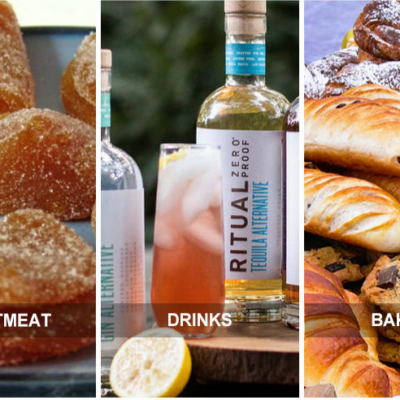
matcha powder applications for beverages bakery and food manufacturing
Recommended Placement:
Before FAQ section
Image 4
Image Title:
1A to 7A Matcha Grade Quality Chart
Alt Text:
1A 2A 3A 4A 5A 6A 7A matcha grade quality chart
Recommended Placement:
Before comparison table
Recommended SEO Keywords
建议文章自然布局以下关键词:
Main Keywords
- matcha powder supplier
- matcha powder manufacturer
- matcha grade guide
- matcha grades
- 1A to 7A matcha
- premium matcha powder
Long Tail Keywords
- best matcha grade for latte
- matcha powder for coffee shops
- matcha powder for beverage manufacturers
- culinary matcha vs premium matcha
- how to choose matcha powder
- wholesale matcha powder supplier
Meta Keywords (Optional)
matcha powder supplier, matcha manufacturer, premium matcha powder, matcha grades, 1A matcha, 7A matcha, wholesale matcha powder, matcha for beverages